
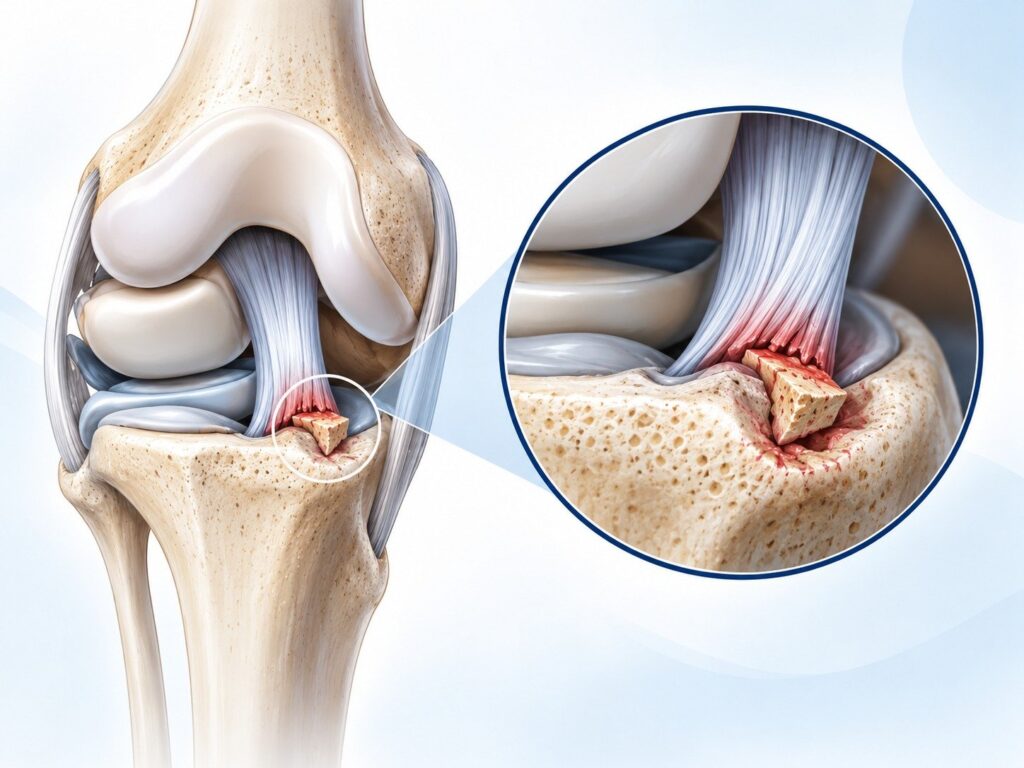
PCL avulsion injury causes concern for many people with knee pain. The posterior cruciate ligament (PCL) is a strong band inside your knee. When this ligament pulls away from the bone, it is called a PCL avulsion injury. Often, this happens after a sudden force or trauma to the knee. In this blog, we will explain what a PCL avulsion injury is, discuss its common causes, review risk factors, and share ways to prevent it. Understanding these points can help you protect your knees and stay active.
What is a PCL Avulsion Injury?
The PCL is one of the main ligaments in your knee. It keeps your knee stable and helps you move safely. Sometimes, a strong force can pull the PCL off the bone. This is called a PCL avulsion injury. Unlike a simple tear, the ligament stays whole but separates from where it attaches. This injury can cause pain, swelling, and trouble moving your knee. According to orthopedic research, PCL avulsion injuries are less common than other knee injuries, but they can be serious (source: PubMed).
Common Causes of PCL Avulsion Injury
Many things can cause a PCL avulsion injury. Most often, it happens when the knee faces a sudden, strong force. For example, a direct blow to the front of the knee can cause this injury. Here are some common causes:
Additionally, sudden stops or changes in direction during sports can also increase the risk. According to the CDC, knee trauma is a common reason for ligament injuries in both young and older adults.
Risk Factors for PCL Avulsion Injury
Some people are more likely to have a PCL avulsion injury. While anyone can get hurt, certain factors raise your risk. These include:
However, even people without these risk factors can sometimes get a PCL avulsion injury. Being aware of your risk can help you take steps to protect yourself.
How to Prevent PCL Avulsion Injuries
Fortunately, you can lower your risk of a PCL avulsion injury. Here are some simple tips to help keep your knees safe:
In addition, learning the right way to move and lift can protect your knees. If you have had a knee injury before, talk to your doctor about ways to prevent another one.
Understanding the causes and risks of PCL avulsion injuries can help you take timely action and protect your knee health. Consult Dr. Rajesh Thunuguntla for personalized orthopedic guidance, accurate evaluation, and suitable treatment options for PCL injuries.